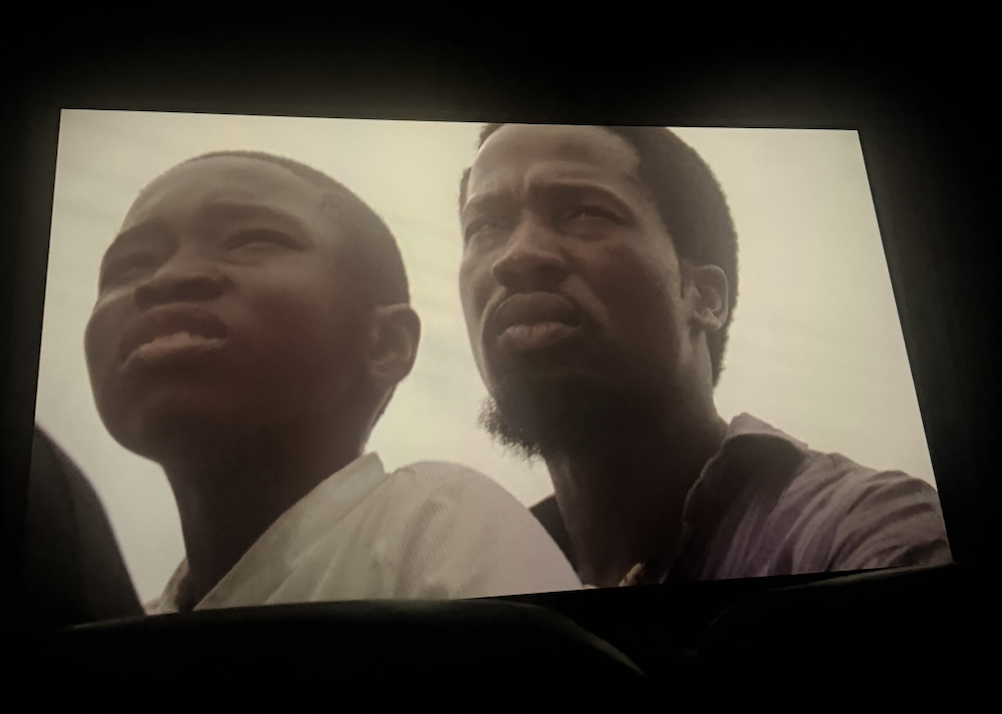
I went to see My Father’s Shadow because a friend of mine made it. I expected to feel proud. I wanted to understand why his film kept collecting awards. I wasn’t prepared for what it did to me. I walked in, curious. I walked out changed.
There’s a moment early on where the kids ask their father a question so simple it splits you open: if love means absence, does it still count? Their dad is out working, grinding, doing what men are told is the job (providing). And these children, with all the brutal clarity that only innocence can produce, ask whether love is supposed to look like someone who’s never there. It’s the kind of question that doesn’t need an answer because the asking is the answer.
Then the father starts to narrate. And when he says “Nigeria is hard,” that’s the line that broke me. Not because it’s dramatic. Because it’s true. It carries the weight of every man who has ever had to choose between being present and being useful. Between showing up for a school play and making sure there’s a school to go to. That line isn’t a complaint. It’s the truth whether you replace the country.
What makes this film so layered is the thing the father doesn’t realise about himself. He talks about his own dad not being there. He carries that wound openly. But he doesn’t see that he’s repeating the same pattern, walking in his own father’s shadow without knowing it. That’s the complexity of the film. It’s not a villain story. There’s no bad guy. Just men doing what they were taught, passing down absence like an inheritance they never chose.
The film says the only job of a man is to take care of his family. And then it quietly asks: but what if taking care of them is the very thing that takes you away from them?
There’s a scene where the father is vulnerable with his son about losing a friend, someone who drowned while they were swimming together. He talks about how that loss shaped his own fears, how grief doesn’t just sit in the past but moves into your body and starts making decisions for you. That vulnerability, from a man to his child, felt rare. It felt necessary.
He goes on to name his first son after his late brother. Not as tribute in the way people usually mean it, not a plaque on a wall. More like a prayer. Like if he could give that name new breath, maybe he could find some peace. Legacy is so complex. We think of it as something we build forward, but so much of it is about what we’re trying to heal from behind us.
I looked around the theatre in LA and watched a roomful of men start to cry. Not the kind of crying people do at sad movies. The kind that happens when something cracks open inside you, when a film finds a pressure point you didn’t know was there. I teared up too. Because the weight this film describes isn’t hypothetical for men, it’s the thing a lot of people carry every day and rarely name.
There’s a line in the film that has stayed with me since I left that theatre:
“The memory pains you when someone leaves, but they’re the same memories that will comfort you later.”
That’s the whole film in one breath. Love and loss aren’t opposites. They’re the same thing experienced across time. The moments that hurt the most when someone is gone are the exact moments that will hold you together years later.
My Father’s Shadow isn’t just a good film. It’s an important one. It gives language to the silence that so many men live inside. It doesn’t judge the father for his absence or excuse it. It just holds the full weight of the contradiction: that a man can love his family completely and still not be there. That he can see his own father’s failures clearly and still repeat them. That legacy isn’t always built; sometimes it’s just inherited, whether you want it or not.
Now I understand why it keeps winning. Not because it’s technically brilliant, though it is. But because it tells the truth about something most people are too afraid to say out loud. And in a dark theatre in LA, surrounded by strangers who were all feeling the same thing, that truth felt like permission.
If you’ve ever carried the weight of trying to be enough for your family while quietly wondering if you’re repeating every mistake your father made, this film will find you. It won’t fix it. But it’ll make you feel less alone in it.
Permission to admit that providing isn’t the same as being there. That you saw your father get it wrong and you’re terrified you’re doing the same thing. Permission to step out of the shadow.
I encourage everyone to see it in the theatre. I may also host a viewing in LA, so if you are interested, reach out to me.
Where to See It
My Father’s Shadow is distributed by MUBI. Catch it on the big screen. Check Fandango or your local theatre for the latest showtimes.