They, Them.
The invisible people we’ve handed the keys to our lives.
There is a phrase that lives in the walls of every executive room, every open-plan office, every Slack channel humming with unspoken politics. You have said it. I have said it. We have all, at some point, leaned across a table or lowered our voice and whispered it:
They don’t want me to get that promotion.
They are out to get me.
They will never let someone like me sit at that table.
They. Them. Those unnamed, faceless forces we have cast as the architects of our limitation.
Now, before I go any further, let me be clear. Some of those forces are real. There will be people in your path who are navigating their own jealousy, their own inadequacy, and your brilliance will be the thing that triggers it. Your excellence will make them uncomfortable. That is not paranoia. I have seen it. I have lived it.
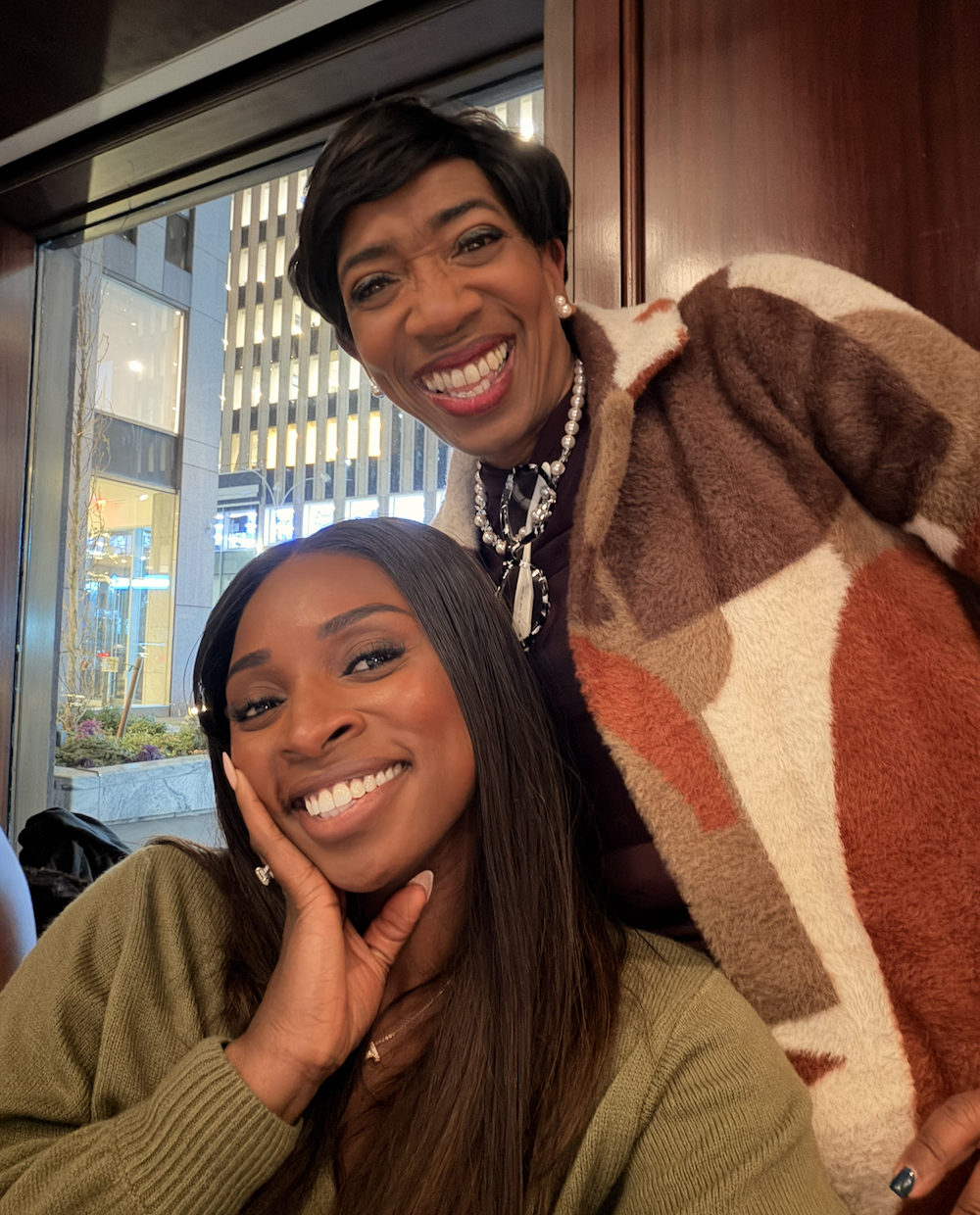
But here is the question Carla Harris asked a room full of people who, between them, managed funds from $150 million to well over a billion dollars, and made everyone go quiet…..
“We give them too much power.”
The room did not go silent because it was a revelation. The room went silent because everyone in it recognised the truth of it. We had all, at some point, regardless of title, regardless of achievement, been sitting in that same mental space. Letting other people’s fear of us dictate what we reached for.
I was in New York when this happened. And those who know me know my complicated relationship with that city, the ambition of it, the beauty of it, the coldness of it all at once. I was at a dinner curated by a remarkable colleague from Morgan Stanley, hosted by the trailblazer herself, Carla Harris. And as I looked around that table at these extraordinary Black minds, the thought struck me: every single person here has, at some point, whispered the word they.
That is what made Carla’s statement land so hard, because it wasn’t directed at people who hadn’t made it. It was directed at people who had and yet still gave power away.
— — —
Here is something I have noticed. When we say they, we rarely ask the next question: who, specifically, is they?
Name them. Go on. Say the actual name.
Because the moment you name them, they shrink. They go from being a coordinated, all-powerful force operating against your destiny to being one insecure middle manager, one threatened colleague, one person working through their own limitations. That is the beginning of reclaiming your power, not denial, not toxic positivity, not pretending the politics don’t exist. Simply refusing to let the unnamed live rent-free and unchecked in your head.
I have heard it said to me directly: “There were so many people against you.” And every time, my response has been the same. Can people be more ruthless? Sure. But more strategic than me? Not a chance. And the moment I start believing they are, that is the moment I start organising my choices around their moves rather than my own. I have already lost.
And they are not always a person. I have friends who are creators, writers, entrepreneurs, people building audiences and businesses in public. And I have heard this same energy directed at the algorithm. The algorithm is against me. The algorithm doesn’t want Black creators to win. The algorithm is suppressing my content. And honestly? Sometimes there is truth in that. Bias exists in the systems we operate in, not just the people. But I have also watched those same creators spend so much time in a standoff with one platform that they never tried another. They never built the email list (I have been there). Never showed up somewhere new. The algorithm became they, and they became the ceiling. The platform is not the point. Your voice is the point. If this one isn’t working, find the room that will.
We are, I think, repeating something. Our parents’ generation handed significant mental real estate to they. I watch it now in rooms and leadership teams, executives afraid to speak up, professionals self-editing in real time, talented people making themselves smaller to avoid the gaze of whoever they have become this week. The fear is real. The impact is real. And it is costing us.
“You have the capacity to out-think, out-build, and out-last any of them. The question is whether you’re using it.”
So what do you actually do about it? I am not in the business of offering advice I haven’t tested. Here is what has worked, and what I believe.
Find your allies, and I mean genuinely and strategically, because the two are not in conflict. Authentic relationships are your greatest strategic asset. Who are the people who light up when you’re in the room? Who champions your thinking even when you’re not there to hear it? Build with them. Build deeply. And do not limit yourself to the vertical; allies above and below you are equally valuable. The people who see you clearly are the they you should be pouring your energy into.
Build beyond the building. One of the most dangerous positions to be in is when your entire network exists within a single organisation. If your sponsor leaves, if the culture shifts, if politics change (which they always do), you need a foundation that holds. External relationships, external reputation, external impact. That is what travels with you regardless of who is having what conversation about you in what meeting room.
And then, perhaps most importantly, be loud in the right way. I am not suggesting performance. I am not suggesting noise for its own sake. But I have watched people lose ground not because of their work but because they assumed the work would speak for itself. It rarely does, alone. The people who get the rooms, the opportunities, the recognition, they have learned to sing their own song to the people who matter. The difference is you’re not fabricating the song. You have the receipts. You have the track record. You have the integrity. Use your voice.
I think about every organisation I have moved through. Every season of politics. Every moment, someone whispered to me that they were coming. And what I know, what I carry with me, is that I never folded. I left each chapter with my integrity intact, with allies I would work with again tomorrow, with a reputation that could walk through a door before I did. That matters more than any they ever have.
One last point I want to leave you with
“When you choose to become your own, they be strategic, deliberate, unapologetic, no one else can hold that seat.”
You have power in this equation. You have always had it. The question is not whether they are real. Some of them absolutely are. The question is whether you are going to continue building your life around their limitations, or get serious about your own.
They have been living in your head for free for long enough.
What are you going to do with the space?
— Tope