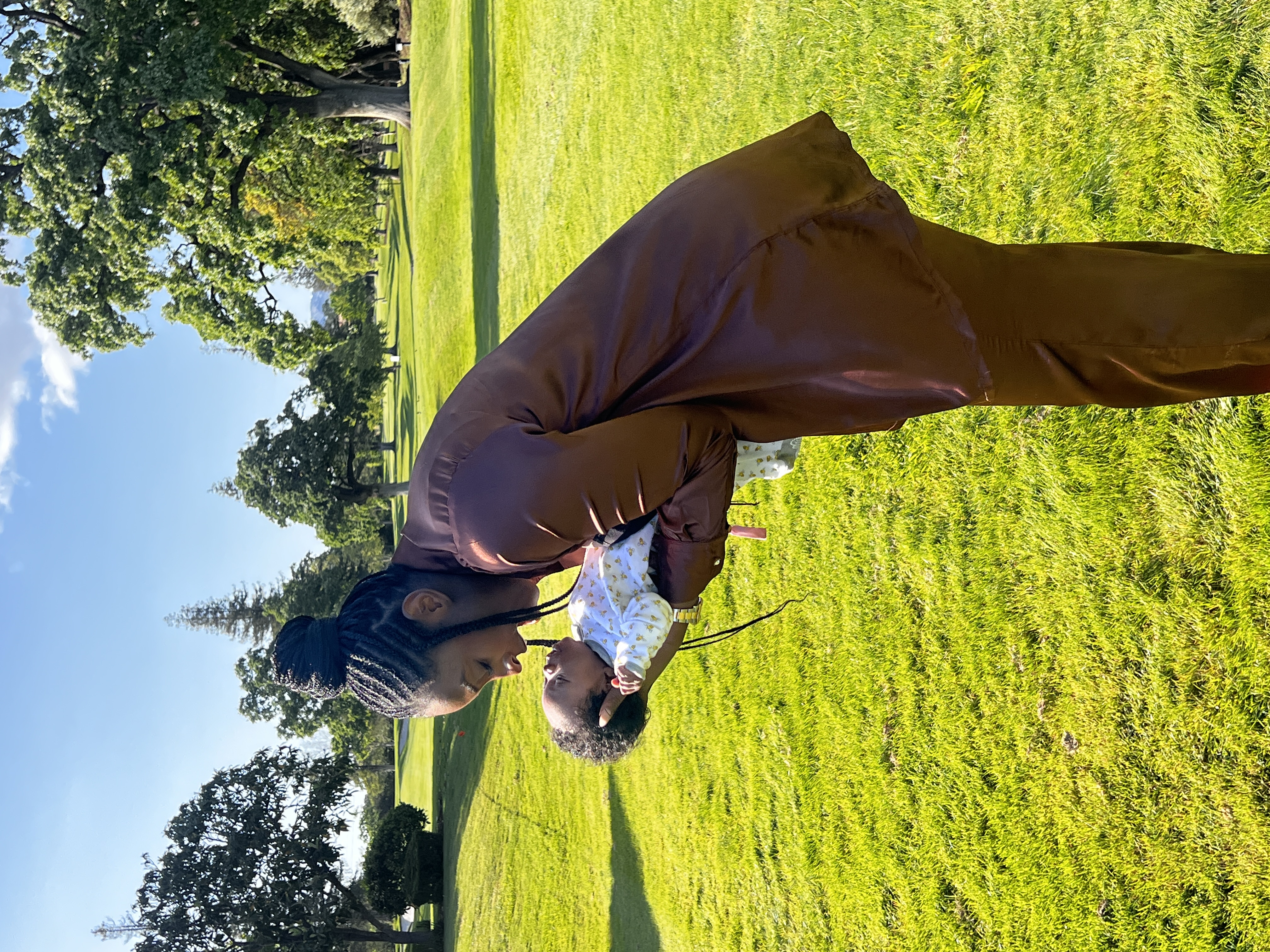
I started a new Instagram page. And no, it’s not a rebrand. It’s just a whole new page, in the middle of podcast season, and in the middle of founding a company- wait, I forgot- in the middle of selling a home. Which is either very brave or very stupid, and I’m genuinely not ruling out the second one.
But it started with a conversation. My friend Niji is a musician. A jazz player, and an extraordinary one. He’s built a platform over a long career, and one day during our pre-tour check-ins, we were having a moment, and he said to me: people had boxed him in. He was a musician. Everything else he was interested in, or he was good at, had nowhere to live.
He said that because of who he’d played with (global superstars) and where he’d been, people assumed he already had the support he needed. They naturally assumed someone else was showing up for him.
And it dawned on me what this was, or rather what I’ve come to call it, for lack of a better term. It’s the support paradox.
You hope the people who know you will show up for you. They assume you already have people showing up for you. So nobody shows up.
And the platforms have made this incredible worse. Instagram and, to some extent, TikTok now push your content out to your friends first, on the logic that your friends are the ones who’ll support you. Except your friends are the ones who assume you don’t need it. So you hope the people who know you will show up. They assume you already have people showing up. So nobody shows up.
So the engagement falls flat. Which impacts your growth, and then you don’t grow. You get fewer brand partnerships. And then, like most things that don’t grow, you get in your head. You start wondering whether you’re even enough. Whether people see you for who you are, or for what you can bring and deliver.
It becomes a spiral, and it’s a ridiculous one, and knowing it’s ridiculous does absolutely nothing to stop it at eleven o’clock at night.
Now, of course, I know better. I have always known better. My friends were never my target audience; that is marketing 101, and I’ve taught it to other people. I built my platform off my brand, not off my address book. A marketing executive first, then a consultant and strategist, now a founder, and, alongside all of it, someone who genuinely loves tennis, beauty, and makeup and isn’t remotely embarrassed about it.
But knowing something professionally and feeling it personally are two different sports.
However, I’ve had to make peace with the fact that the people who watch and don’t engage aren’t doing it out of malice. They aren’t withholding something (well, not really). They just want to keep tabs on you. Watching your updates is their form of care. They’re checking that you’re alright. If you think about it….In some odd way, it’s affection. It just doesn’t build anything that you need.
So I sat down and asked myself an annoying question… what do you actually want to be known for? This was the daunting question for the best part of the year I took trying to reset.
I could be known for many things. I’m sure I already am. Some know me as a sister and a daughter. To some, a good friend or a lover. In the corporate space, I am known as a sponsor or mentor to many people. All the titles that live and matter enormously in their own right.
But there was one title I had been actively running from. Let me explain why, because it isn’t what you think.
To know me is to know that children were never top of my to-do list. Having a child was never something I sat and envisioned for myself. It was something I understood I would give in honour of a partnership, in honour of a marriage. To me, giving someone a child is an honour. What a person does with that honour afterward is an entirely separate conversation.
But I had watched too many women disappear into motherhood, some of my favorites. I watched the whole self get slowly absorbed into the role until there was nothing left that was just hers. And I promised myself from early on, and with some force, that I would not be one of them.
So in my head this is how the order of events went, because it matters. The refusal came first. I spent years deciding who I would not become, long before there was any child to become it for. And then I became a mother, and every one of those years came into the room with me.
So I ran. I ran from anything that even faintly resembled making motherhood my identity. I made absolutely certain it wasn’t the first thing people saw.
Except it was my identity. I’d just made it invisible.
Because in every room I walked into, I was the mother with her child. Whether at Cannes. At CES. At any of the conferences, and on large stages. The spaces that you’re not supposed to bring a child to. (If you read my last article, you will remember that I believe in bringing your child to as many adult spaces for development purposes) Anyways, I digress.
There was one trip where the whole infrastructure I had built collapsed. I had a newborn and was scheduled to be on stage. My child’s father had his own business trip. The regular nanny cancelled at the last minute, and I was in another state. So I flew my best friend in to help. Essentially, to sit in a room with my baby so that I could go and be a professional for a few hours.
And at that conference, someone came up to me and said, “You’re always with your child.“ I commend you for doing this.
They meant it kindly. But what they were commending was a logistics failure I had personally financed. And I did have support; I know, because plenty of women have none at all. I just had to put mine on a plane. That was the version of support available to me: not a partner’s diary being adjusted, just a friend, and a booking confirmation.
And it was being commended in a room where no man would ever be commended for the same thing, because no man in that room was doing it.
Look, the comment was generous. It was that the thing I had worked hardest to keep invisible was the first thing everyone saw, and the only thing anyone thought to praise. I wasn’t being seen as an executive who had solved a problem in eighteen hours. Rather, I was being seen as a mother who had brought her baby to work.
I joke about this, but there’s a seriousness underneath the joke. I have watched women decline business trips again and again and again. I have never once watched a man wonder whether he could go. He just goes because he knows that someone will figure it out. And 100% of the time, that someone is almost always a woman.
So I didn’t want to have to own motherhood publicly in order for my identity to be complete. And at the same time, I didn’t want to be known only for my work, or just as a global strategist or a consultant. So I ran from that too.
Which left me with what, exactly? A platform built entirely out of the things I refused to be. And at some point you have to admit that the thing you’ve built isn’t the thing you wanted, and start again in public, where people can see you doing it.
I genuinely thought I had two problems. But I actually had one glaring one. I thought I had a reach problem. The algorithm was feeding me to people who’d already decided I was fine.
But the people who assume you don’t need support are, without exception, the people who already know you. Which means the only way out of that trap is to be found by people who don’t. So that leaves me with strangers. And strangers cannot find you if you have never said plainly what you are.
So the reach problem and the identity problem were never two problems. Refusing to name myself was the thing capping my reach. I had built something only my existing audience could recognise, and my existing audience was precisely the audience least likely to move.
Introducing…..The Mother Exec
It took me embarrassingly long to answer my own question. When it came, it came as one sentence: in order to find your community, you have to let your community know who you are.
Not who they’ve known. Most of the people following me have known parts of my life. Fragments, curated by me, specifically so that no single fragment could ever become the whole.
And I couldn’t keep hiding that I’m a mother, an executive, and a consultant. A mother who enjoyed playing tennis. I couldn’t hide that what I actually want, the thing underneath all of it, is for women to know they can build a life that doesn’t centre everyone else. A life that completely centres them.
So: The Mother Exec.
Say it out loud. It flows. The mother and the executive, and inside those two pillars, every other facet gets to live. The mother who plays tennis with other mothers. The mother who creates tennis content with Serena Williams on a random Thursday. Or who takes the holiday in the middle of the tight deadlines to regulate her nervous system. The business owner, exhausted, and not afraid to say so. The woman living unapologetically, in public, without a finished answer for once.
My original account stays exactly where it is. That’s still very much me, and if you want the updates, you’ll get the updates, though less frequently, but they’ll be there. I’m not asking anyone to move. If keeping tabs is what you want and what you find manageable. Then that is genuinely fine.
But if you want the thought leader. The mother figuring it out in real time. If you want the founder who is tired. And if you want the woman who books the holiday anyway, that’s the new one. Instagram and TikTok both. (@themotherexec)
One account is for people who want to watch. The other is for people who want to engage, learn, and build. I’ve stopped pretending those are the same audience, and I’ve stopped being wounded that they aren’t.
Everyone knows a mother. Everyone knows someone who has had to start again.
Niji’s problem was that people had put him in a box he never chose. Mine was the opposite. I refused every box ever assigned to me, and ended up with nothing anyone could find me in.
I spent years, most of them before there was ever a child, making certain that motherhood would not be my identity, and now look at me….I have just gone and put it in my handle.
I don’t think I’ve resolved that. It’s funny to me when I think about it, and I don’t think I’ve made the two women agree with each other. I think I’ve just stopped pretending they were ever two separate women, and started building in front of people, instead of around them.
Ask me in a year whether it worked; I just know for the first time in a long time. I have nothing to prove.